Sustainable.ac

Sustainable living, honestly

The most powerful climate action is on your plate.

Food systems drive a third of global emissions, most deforestation and the collapse of wildlife. Shifting to plant-based food is the single biggest way to reduce your impact on the planet.

75%

less farmland needed if the world ate plant-based

~75%

lower diet emissions for vegans vs high meat-eaters

83%

of farmland is used for livestock — giving only 18% of calories

54%

less water use on a vegan diet

See the difference for yourself

Explore the data behind everyday foods, test the swaps that fit your week, and learn to spot claims that sound green but are not.

The sustainable living library

Explore the evidence, find everyday answers, and build habits that fit your life.

Explore more

Why food, not just straws and light bulbs?

Recycling, LED bulbs and reusable bags matter, but they save a fraction of what changing your diet does. And unlike giving up a car or flights, everyone eats — three times a day. Diet change also cuts land use, water pollution and biodiversity loss in a way no other personal action can.

Compare actions

Tonnes CO₂e saved per year

“A vegan diet is probably the single biggest way to reduce your impact on planet Earth — not just greenhouse gases, but global acidification, eutrophication, land use and water use.”

— Joseph Poore, University of Oxford

Tools to see the difference

Don’t fall for the green label

“Carbon-neutral beef”, “sustainable salmon”, offsets that never happened. Learn how marketing hides real impact.

Greenwashing

Sustainable living starts with the everyday

A more sustainable life is not a shopping list of green products. It is a way of understanding the systems behind daily choices, prioritising meaningful changes, and making those changes practical enough to keep. Food is a powerful place to begin.

3 min read
01

Start with impact, not appearances

A reusable bag is visible; the land required to produce a meal is not. This makes sustainability easy to misunderstand. Production, feed, fertiliser, energy and land-use change often matter much more than a product’s packaging. Looking beyond the label helps direct effort toward the parts of life with the greatest environmental consequences.

Plant-based eating can reduce several pressures at once: greenhouse gases, demand for agricultural land and some forms of pollution. It is not a substitute for changes to transport, heating or public policy. The strongest starting point depends on your current habits, but food offers a recurring opportunity rather than a one-time purchase.

  • Compare your current habits before buying replacements
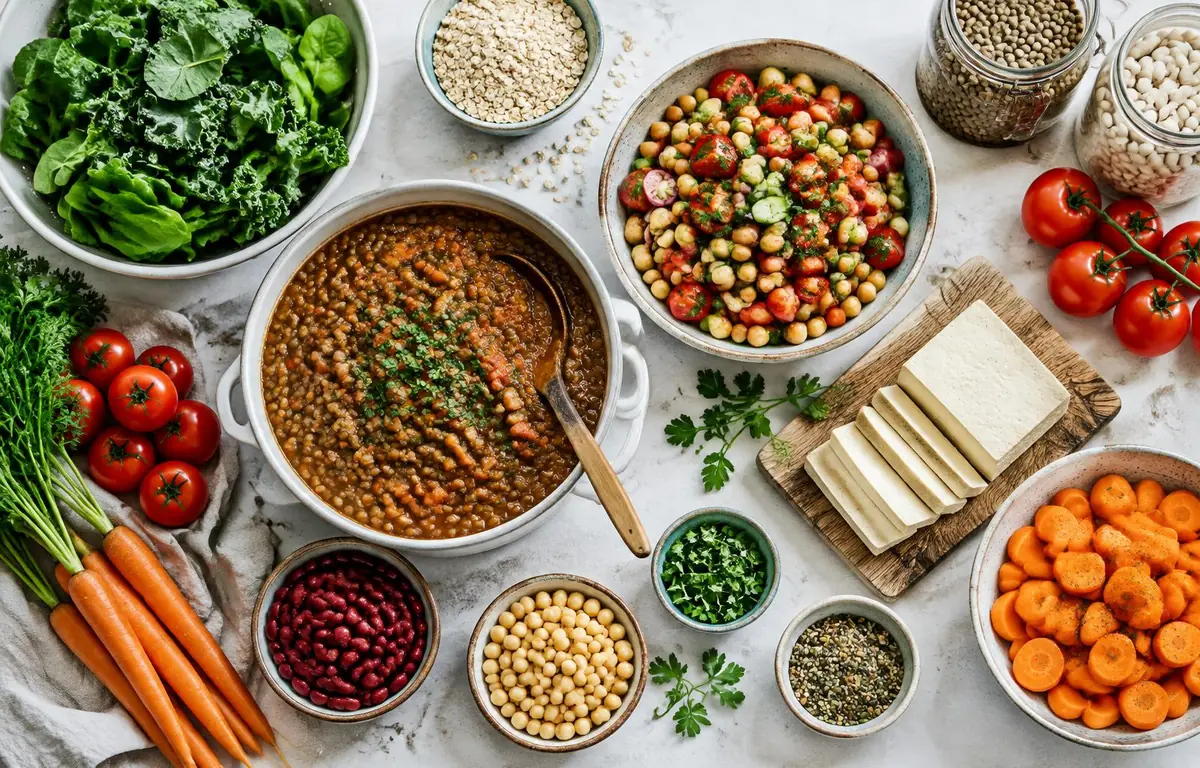
  • Make familiar meals with beans, lentils or tofu
  • Keep useful belongings rather than replacing them for a green label
Source: Our World in Data · Environmental impacts of food
02

Why the food system matters

Food connects the atmosphere to soils, rivers, forests and oceans. Agriculture produces greenhouse gases directly and also changes how land stores carbon. Feed production and grazing occupy large areas. A food choice therefore has consequences beyond its carbon number, even when those consequences are not easy to express in one score.

The environmental advantage of plant-rich diets is a finding across multiple studies, not a guarantee about every individual ingredient. Farming practices, irrigation and waste still matter. A thoughtful plant-based pattern combines lower-impact proteins with sufficient nutrition, affordable staples and attention to how food is stored and used.

  • Use the diet comparison to understand multiple impacts
  • Treat global averages as context rather than personal measurements
  • Consider nutrition alongside environmental choices
Source: Poore & Nemecek · Science · 2018
03

A practical rhythm for change

Lasting changes usually begin with reliable routines. Learn a breakfast you like, two easy dinners and a way to use leftovers. A stocked cupboard makes the lower-impact choice convenient when life is busy. Familiar spices and cooking methods can make new ingredients feel ordinary rather than like a restrictive diet.

There is no need to rebuild your life overnight. Start where you have control, and work around access, culture, time and health needs. Gradual changes can grow into a broader pattern. When something does not work, adjust the meal or the routine rather than treating one difficult day as failure.

  • Choose two meals to repeat this week
  • Keep frozen vegetables and canned legumes available
  • Plan tomorrow’s lunch while preparing dinner
Source: NHS · The vegan diet
04

Individual choices and collective change

Personal action can change demand, introduce others to new foods and make alternatives feel normal. It cannot by itself redesign electricity grids, agricultural subsidies or public transport. An honest sustainability platform acknowledges both the importance of everyday decisions and the institutions that determine which options are available to people.

Food served in schools, workplaces and public institutions shapes habits at a larger scale. Requesting appealing plant-based options, supporting accessible transport and engaging with local decisions can multiply personal efforts. The aim is not to blame people with limited choices, but to expand good choices and reduce structural barriers.

  • Ask your workplace for an appealing plant-based meal
  • Support policies that make sustainable options accessible
  • Discuss solutions without shaming people’s circumstances
Source: IPCC · Climate Change and Land · 2019
05

Use evidence without demanding certainty

Research can show a strong direction even when exact numbers vary. Studies use different countries, diet definitions and measurement boundaries. A percentage reduction in a UK study should not be presented as the exact result for every person on Earth. Understanding uncertainty makes the evidence more useful, not less persuasive.

Our tools are starting points for thinking and planning. The calculator uses simplified averages; the claim checker highlights questions rather than establishing legal truth. Follow the source links, compare assumptions and be willing to revise an idea when better evidence appears. Good sustainability decisions remain open to learning.

  • Read the source behind a striking number
  • Look for the comparison baseline
  • Distinguish an estimate from a verified measurement
Source: Scarborough et al. · Nature Food · 2023

Make your next meal count

Join people around the world who have pledged to eat plant-based — for a week, a month or for good. It is free and takes less than a minute.

Take the pledge