
Plant-based recipes

Cheap, quick and good for the planet. Start with one a week.

Breakfast 10 min

Peanut butter banana oats

A warm, protein-rich breakfast in ten minutes.

Ingredients

  • 80 g rolled oats
  • 250 ml oat milk
  • 1 banana
  • 1 tbsp peanut butter
  • Cinnamon

Method

  1. Simmer the oats in the oat milk for 5 minutes.
  2. Stir in the cinnamon and peanut butter.
  3. Top with sliced banana.
View recipe: Peanut butter banana oats
Mains 35 min

Red lentil coconut dal

Creamy, comforting and costs pennies per bowl.

Ingredients

  • 200 g red lentils
  • 1 onion
  • 2 garlic cloves
  • 400 ml coconut milk
  • 400 g chopped tomatoes
  • 2 tsp curry powder
  • Spinach

Method

  1. Fry the onion and garlic with the curry powder.
  2. Add the lentils, tomatoes, coconut milk and 300 ml water; simmer for 20 minutes.
  3. Stir in the spinach and serve with rice.
View recipe: Red lentil coconut dal
Mains 25 min

Crispy chickpea salad

Roasted chickpeas, crunchy veg and tahini.

Ingredients

  • 400 g chickpeas
  • 1 cucumber
  • Cherry tomatoes
  • Red onion
  • Parsley
  • Lemon
  • Olive oil
  • Tahini

Method

  1. Roast the chickpeas with spices for 20 minutes.
  2. Chop the vegetables and herbs.
  3. Toss together and drizzle with a lemon-tahini dressing.
View recipe: Crispy chickpea salad
Mains 30 min

Black bean tacos

Smoky beans, avocado and fresh salsa.

Ingredients

  • 400 g black beans
  • Sweetcorn
  • Avocado
  • Tortillas
  • Lime
  • Smoked paprika
  • Salsa

Method

  1. Warm the beans with smoked paprika and cumin.
  2. Mash the avocado with lime.
  3. Fill the tortillas with beans, sweetcorn, avocado and salsa.
View recipe: Black bean tacos
Mains 40 min

Ginger tofu stir-fry

Golden tofu with vegetables over rice.

Ingredients

  • 300 g firm tofu
  • Broccoli
  • Bell pepper
  • Soy sauce
  • Ginger
  • Garlic
  • Rice

Method

  1. Press and cube the tofu; pan-fry until golden.
  2. Stir-fry the vegetables with ginger and garlic.
  3. Add the tofu and soy sauce; serve over rice.
View recipe: Ginger tofu stir-fry
Breakfast Servings per meal: 1

Banana peanut oats

Ingredients

  • 60 g Rolled oats
  • 200 ml Fortified soy drink
  • 1 piece Banana
  • 1 tbsp Peanut butter

Method

  1. Simmer oats with the soy drink until creamy. Slice the banana and stir in peanut butter. Adjust thickness with water. Use a suitable alternative if peanuts or soy do not fit your allergy requirements.
View recipe: Banana peanut oats
Breakfast Servings per meal: 1

Apple cinnamon overnight oats

Ingredients

  • 60 g Rolled oats
  • 150 ml Fortified soy drink
  • 1 piece Apple
  • 1 tbsp Chia seeds

Method

  1. Mix oats, soy drink and chia in a covered container. Refrigerate overnight. Add chopped apple in the morning and cinnamon if available. Keep refrigerated and follow local guidance for safe storage.
View recipe: Apple cinnamon overnight oats
Breakfast Servings per meal: 1

Tofu breakfast toast

Ingredients

  • 100 g Firm tofu
  • 2 piece Wholegrain bread
  • 100 g Tomatoes
  • 0.5 tbsp Olive oil

Method

  1. Crumble tofu and cook gently with oil and your preferred seasoning. Toast the bread, add chopped tomatoes and serve with the tofu. Check bread and tofu ingredients for any relevant allergens.
View recipe: Tofu breakfast toast
Mains Servings per meal: 1

Chickpea lemon grain bowl

Ingredients

  • 150 g Cooked chickpeas
  • 150 g Cooked rice
  • 100 g Cucumber
  • 1 tbsp Tahini

Method

  1. Combine chickpeas, rice and chopped cucumber. Thin tahini with water and lemon juice if available. Toss and season to taste. Use rice freshly cooked or stored safely according to local food-safety guidance.
View recipe: Chickpea lemon grain bowl
Mains Servings per meal: 1

White bean tomato toast

Ingredients

  • 150 g Cooked white beans
  • 2 piece Wholegrain bread
  • 150 g Tomatoes
  • 0.5 tbsp Olive oil

Method

  1. Warm beans with chopped tomatoes and olive oil until the tomatoes soften. Season with herbs or spices you enjoy. Spoon onto toasted bread. Adjust the amount of bread and beans to your appetite.
View recipe: White bean tomato toast
Mains Servings per meal: 1

Lentil vegetable bowl

Ingredients

  • 150 g Cooked lentils
  • 150 g Cooked rice
  • 150 g Frozen vegetables
  • 0.5 tbsp Olive oil

Method

  1. Heat the vegetables thoroughly and combine with warmed lentils and rice. Add oil and preferred seasonings. Use freshly prepared rice or safe refrigerated portions. Add a vitamin C-rich accompaniment where suitable.
View recipe: Lentil vegetable bowl
Mains Servings per meal: 1

Tomato lentil pasta

Ingredients

  • 80 g Dry pasta
  • 150 g Cooked lentils
  • 200 g Canned tomatoes
  • 80 g Frozen spinach

Method

  1. Cook pasta according to its packet. Simmer tomatoes with lentils and spinach until thoroughly heated. Season to taste and combine with drained pasta. Check pasta ingredients if avoiding eggs or wheat.
View recipe: Tomato lentil pasta
Mains Servings per meal: 1

Tofu vegetable rice

Ingredients

  • 150 g Firm tofu
  • 150 g Cooked rice
  • 200 g Frozen vegetables
  • 0.5 tbsp Olive oil

Method

  1. Cube and brown tofu in the oil. Add vegetables and cook thoroughly. Serve over freshly cooked or safely stored rice with your preferred sauce. Check sauces for allergens and adjust seasoning to taste.
View recipe: Tofu vegetable rice
Mains Servings per meal: 1

Chickpea tomato stew

Ingredients

  • 150 g Cooked chickpeas
  • 200 g Canned tomatoes
  • 100 g Frozen spinach
  • 2 piece Wholegrain bread

Method

  1. Simmer chickpeas and tomatoes with spices you enjoy, then add spinach and heat thoroughly. Serve with wholegrain bread. Adjust the texture with water and make only quantities that can be eaten or stored safely.
View recipe: Chickpea tomato stew

Build a kitchen you can rely on

A sustainable menu needs to taste good and fit real life. These recipes are starting points, not a rigid programme. Learn the building blocks of satisfying meals, adapt ingredients to your circumstances and make planning easier through a few repeatable kitchen habits.

3 min read
01

Use a flexible meal formula

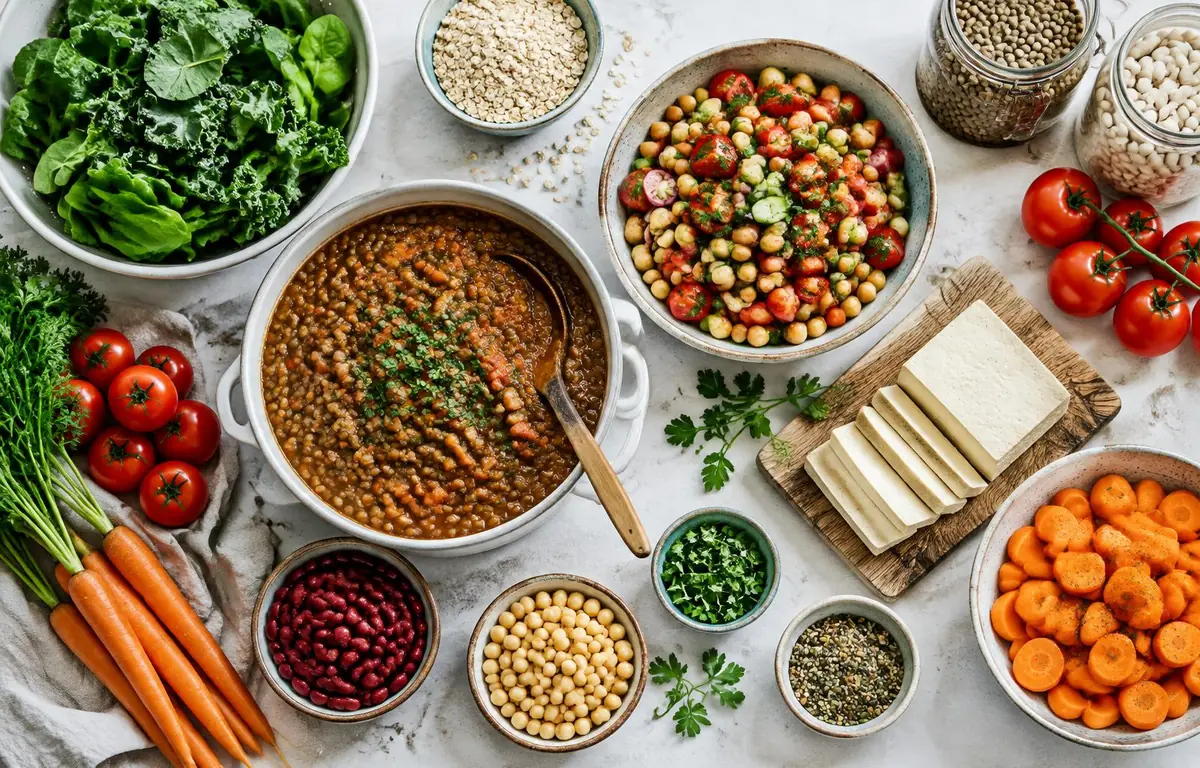
A useful everyday meal can combine a substantial carbohydrate, a protein source, vegetables and a flavourful sauce or seasoning. Rice with beans and vegetables, noodles with tofu, or a lentil stew with bread are familiar examples. This approach makes it easier to improvise without depending on an exact recipe.

Different ingredients have different nutritional strengths. Vary legumes, grains, vegetables, nuts and seeds where suitable, and plan reliable fortified foods or supplements as needed. A list of plant ingredients alone does not guarantee nutritional adequacy. The nutrition guide explains the essentials and situations where professional advice is valuable.

  • Include a meaningful protein source in main meals
  • Use herbs and spices you already enjoy
  • Keep nutritional planning separate from calorie restriction
Source: NHS · The vegan diet
02

Affordability comes from the staples

Dried or canned beans, lentils, oats, rice and seasonal or frozen vegetables can form an affordable base. Specialty substitutes may be convenient, but they are not required for plant-based eating. Compare unit prices, usable quantities and preparation time rather than assuming that every product marketed as vegan represents good value.

Local prices and access vary, so claims that a particular diet is always cheaper are too broad. Food budgets also include time, storage and cooking facilities. A practical recipe should work with the resources available. Canned legumes or a simple one-pot meal can be a sensible choice when time or equipment is limited.

  • Compare unit prices instead of package size
  • Use canned beans when convenience matters
  • Choose a few versatile ingredients for several meals
Source: Our World in Data · Environmental impacts of food
03

Batch cooking without wasting food

Cooking extra can save effort if the food is safely stored and actually eaten. Plan a second use before preparing a large batch. A pot of lentils can become stew, taco filling or a grain bowl. Leftovers are easiest to use when labelled, visible and connected to a specific next meal.

Safe storage matters. Cool and refrigerate cooked foods promptly according to local food-safety guidance, and take particular care with cooked rice. Do not assume smell alone establishes safety. Freeze portions you will not use soon, and reheat appropriately. Sustainability is not a reason to take risks with spoiled or poorly stored food.

  • Assign leftovers to a planned lunch
  • Label freezer portions with contents and date
  • Follow local food-safety advice for cooling and reheating
Source: UNEP · Food Waste Index Report · 2024
04

Substitutions should preserve the meal’s role

Swapping ingredients can improve affordability and suit preferences, but pay attention to what they contribute. Replacing tofu with beans changes texture and cooking time; replacing a fortified milk with an unfortified drink may change protein or calcium. A substitution should solve the practical problem without hiding a nutritional difference.

Allergies require particular care. Soy, nuts, sesame, wheat and other ingredients can appear in plant-based meals. Read labels and consider cross-contact when cooking for others. No recipe on this site is automatically safe for a specific allergy. Use suitable alternatives and qualified guidance where the consequences of a mistake are serious.

  • Read labels for allergens and fortification
  • Adjust cooking times when changing protein sources
  • Discuss allergy requirements before serving shared meals
Source: NHS · The vegan diet
05

Explore flavour rather than imitation alone

Plant-based cooking does not need to revolve around copying meat. Many food traditions already offer dishes built around legumes, vegetables and grains. Lentil stews, bean dishes, vegetable curries and grain-based meals provide a broad starting point. Familiar sauces and seasonings can make the transition feel culturally connected rather than unfamiliar.

Texture matters as much as seasoning. Browning tofu, roasting chickpeas, blending a creamy bean sauce or adding toasted seeds can make a simple meal satisfying. Taste as you cook, and adapt gradually. The aim is a repertoire of meals you want to repeat, not a collection of complicated recipes prepared only once.

  • Try one existing plant-rich dish from your food tradition
  • Use roasting or browning for texture
  • Keep a short list of your most successful meals
Source: NHS · The vegan diet

Make your next meal count

Join people around the world who have pledged to eat plant-based — for a week, a month or for good. It is free and takes less than a minute.

Take the pledge