
Food waste: from shopping to leftovers

Prevent waste with a realistic plan, flexible meals and careful storage. Keeping edible food in use protects the resources already invested in producing it.

Food waste: from shopping to leftovers

Prevent waste with a realistic plan, flexible meals and careful storage. Keeping edible food in use protects the resources already invested in producing it.

3 min read
01

Prevent food waste before managing scraps

Food waste carries the resources and impacts of producing food that is never eaten. Planning, realistic portions, visible leftovers and appropriate storage can reduce that loss. Composting can be useful for unavoidable scraps, but it does not recover all the resources invested in avoidably wasted food.

Distinguish safety-based use-by advice from quality-based date labels according to local guidance. Do not take risks with unsafe storage or spoiled food. A good waste strategy combines food safety with practical habits: check cupboards, freeze appropriate portions and plan a use for ingredients before buying more.

  • Check existing food before shopping
  • Freeze portions you will not use soon
  • Follow local date-label and storage guidance
Source: UNEP · Food Waste Index Report · 2024
02

Batch cooking without wasting food

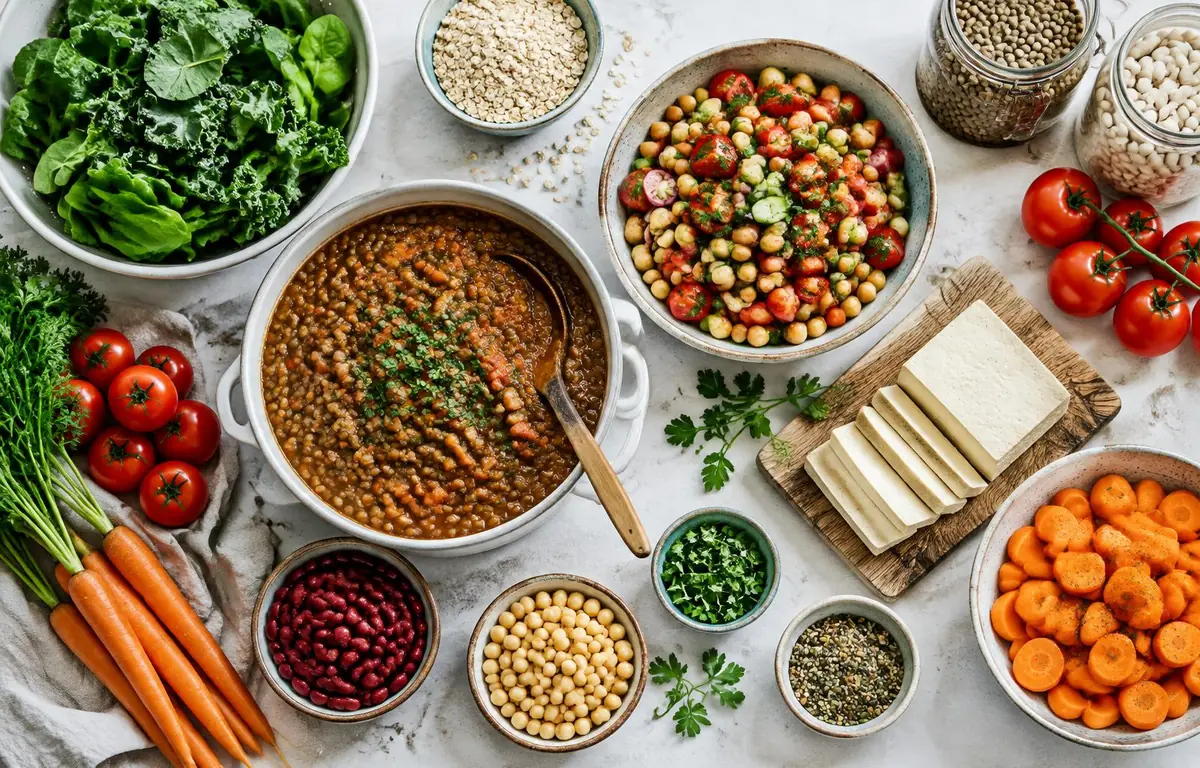
Cooking extra can save effort if the food is safely stored and actually eaten. Plan a second use before preparing a large batch. A pot of lentils can become stew, taco filling or a grain bowl. Leftovers are easiest to use when labelled, visible and connected to a specific next meal.

Safe storage matters. Cool and refrigerate cooked foods promptly according to local food-safety guidance, and take particular care with cooked rice. Do not assume smell alone establishes safety. Freeze portions you will not use soon, and reheat appropriately. Sustainability is not a reason to take risks with spoiled or poorly stored food.

  • Assign leftovers to a planned lunch
  • Label freezer portions with contents and date
  • Follow local food-safety advice for cooling and reheating
Source: UNEP · Food Waste Index Report · 2024
03

Plan around your real week

A useful menu accounts for busy evenings, travel, shared meals and leftovers. It does not need a new recipe every day. Repeating a breakfast or cooking enough dinner for tomorrow’s lunch can reduce effort. Use the meal choices to build a schedule that you can realistically follow.

The suggested meals are examples rather than a nutritionally complete programme. Energy and nutrient requirements vary. Include appropriate fortified foods, supplements and additional foods as needed, and consult qualified guidance for specific requirements. A neat weekly schedule does not establish that every nutritional need has been met.

  • Repeat meals when that makes the week easier
  • Adjust portions to actual appetite and needs
  • Plan reliable B12 separately
Source: NHS · The vegan diet
04

Connect planning with safe storage

Decide which meals will be cooked fresh and which can use safely stored portions. A plan should reflect fridge and freezer capacity, not just enthusiasm for batch cooking. Label stored food and keep it visible. The best shopping list is one that turns into meals actually eaten.

Follow local food-safety guidance when cooling, refrigerating and reheating cooked food. Take particular care with cooked rice and other foods requiring prompt storage. Do not extend storage indefinitely to avoid waste. A smaller batch or a simpler meal can be the more practical choice when safe storage is limited.

  • Match batch size to your storage capacity
  • Label stored portions clearly
  • Follow food-safety guidance rather than relying on smell
Source: UNEP · Food Waste Index Report · 2024
05

Use experience to reduce waste

A week provides enough repetition to notice portion sizes and leftovers. If you prepare too much, plan another meal using the remainder and store it safely. If an ingredient remains unused, choose a different quantity or a more versatile option next time. Practical feedback is more valuable than a perfect-looking menu.

Food waste prevention is part of the challenge because it improves both resource use and everyday efficiency. Do not compromise safety to finish food. Follow local storage guidance and make plans that match your fridge, freezer and schedule. Sustainability works best when its routines are safe and repeatable.

  • Notice which quantities you actually use
  • Assign leftovers to a specific next meal
  • Follow safe storage and reheating guidance
Source: UNEP · Food Waste Index Report · 2024

Make your next meal count

Join people around the world who have pledged to eat plant-based — for a week, a month or for good. It is free and takes less than a minute.

Take the pledge