
Plant protein and balanced meals

Plan nourishing meals with legumes, grains and practical substitutions. Understand protein alongside B12, calcium, iron and the limits of environmental comparisons.

Plant protein and balanced meals

Plan nourishing meals with legumes, grains and practical substitutions. Understand protein alongside B12, calcium, iron and the limits of environmental comparisons.

5 min read
01

Build enough food, variety and protein

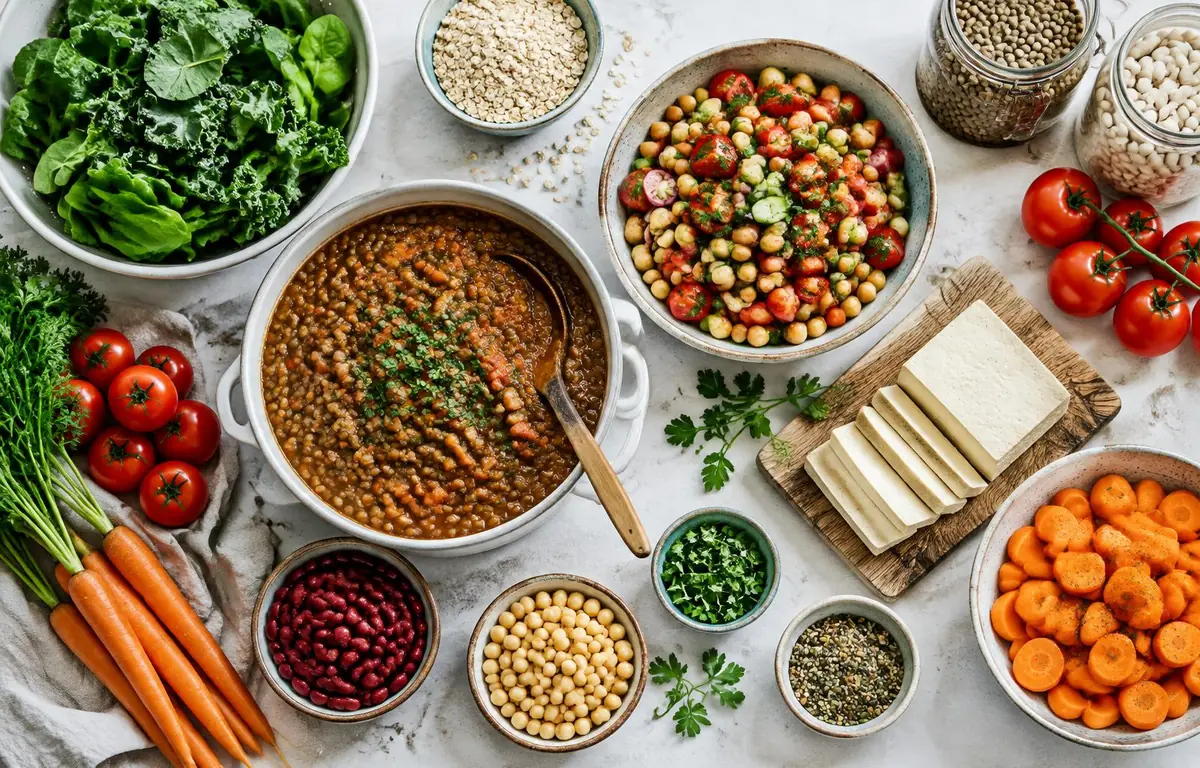
Meals should provide adequate energy as well as nutrients. Legumes, tofu, tempeh and other suitable protein-rich foods can support a varied plant-based pattern. Whole grains, vegetables, fruits, nuts and seeds contribute additional nutrients. A plate made only of salad or low-energy vegetables may not meet someone’s needs.

Protein requirements differ with life stage, activity and health. General guidance cannot calculate the right amount for everyone. Build main meals around a meaningful protein source and adjust portions to appetite and needs. Seek individualized support if you have difficulty maintaining adequate intake or need a diet adapted for a medical condition.

  • Include protein-rich foods in main meals
  • Eat enough overall energy
  • Seek tailored advice for clinical or athletic needs
Source: NHS · The vegan diet
02

Use a flexible meal formula

A useful everyday meal can combine a substantial carbohydrate, a protein source, vegetables and a flavourful sauce or seasoning. Rice with beans and vegetables, noodles with tofu, or a lentil stew with bread are familiar examples. This approach makes it easier to improvise without depending on an exact recipe.

Different ingredients have different nutritional strengths. Vary legumes, grains, vegetables, nuts and seeds where suitable, and plan reliable fortified foods or supplements as needed. A list of plant ingredients alone does not guarantee nutritional adequacy. The nutrition guide explains the essentials and situations where professional advice is valuable.

  • Include a meaningful protein source in main meals
  • Use herbs and spices you already enjoy
  • Keep nutritional planning separate from calorie restriction
Source: NHS · The vegan diet
03

What changes between diet patterns

Reducing animal products changes both direct demand and the mix of foods that replace them. Legumes, tofu, whole grains and vegetables have different footprints and nutritional roles. A vegetarian diet may still include substantial dairy, while a vegan diet may rely on varied combinations of staples and processed alternatives.

Broad categories therefore contain many individual diets. Portion sizes, energy requirements and food waste can influence results. The lower average footprint of plant-based patterns is not permission to ignore these details; it is a reason to build a balanced, practical pattern that works for the person eating it.

  • Replace protein foods with appropriate alternatives
  • Include a variety of legumes and whole grains
  • Avoid assuming every diet label means the same menu
Source: Poore & Nemecek · Science · 2018
04

Substitutions should preserve the meal’s role

Swapping ingredients can improve affordability and suit preferences, but pay attention to what they contribute. Replacing tofu with beans changes texture and cooking time; replacing a fortified milk with an unfortified drink may change protein or calcium. A substitution should solve the practical problem without hiding a nutritional difference.

Allergies require particular care. Soy, nuts, sesame, wheat and other ingredients can appear in plant-based meals. Read labels and consider cross-contact when cooking for others. No recipe on this site is automatically safe for a specific allergy. Use suitable alternatives and qualified guidance where the consequences of a mistake are serious.

  • Read labels for allergens and fortification
  • Adjust cooking times when changing protein sources
  • Discuss allergy requirements before serving shared meals
Source: NHS · The vegan diet
05

Vitamin B12 needs a reliable plan

Vitamin B12 is essential for normal neurological function and blood-cell production. A vegan diet needs a reliable source through appropriately fortified foods or supplements. Unfortified plant foods should not be assumed to provide dependable B12. Do not rely on seaweed, fermented products or a claim that natural eating removes the need.

The appropriate product and schedule depend on guidance and personal circumstances. This page does not prescribe a dose or diagnose deficiency. If you have symptoms, absorption issues or uncertainty about existing intake, speak with a qualified professional. Environmental motivation should never override the need to prevent nutrient deficiency.

  • Check fortification labels rather than marketing language
  • Use a reliable B12 source consistently
  • Discuss symptoms or absorption concerns with a professional
Source: NHS · The vegan diet
06

Calcium, vitamin D and iodine

Calcium can come from suitable fortified drinks, calcium-set tofu and selected plant foods. Fortification varies widely between brands. Vitamin D guidance depends on location, season and individual risk. Iodine is another nutrient that requires attention, and many plant-based milk alternatives are not fortified with it.

Seaweed iodine content can be highly variable and sometimes excessive, so it should not be treated as an automatic solution. Read labels and follow appropriate local health guidance. A familiar substitute is not necessarily nutritionally equivalent to the food it replaces; checking these differences is a basic part of planning.

  • Check calcium and iodine fortification separately
  • Follow local vitamin D advice
  • Do not assume seaweed provides a predictable iodine amount
Source: NHS · The vegan diet
07

Iron and omega-3 sources

Beans, lentils, tofu, whole grains and some seeds can contribute iron. Vitamin C-rich foods alongside a meal can support absorption of plant iron. Needs vary, and iron supplementation should not be treated as a universal recommendation. Persistent fatigue or suspected deficiency deserves proper assessment rather than guesswork from a general guide.

Ground flaxseed, chia and walnuts provide a plant omega-3 source. Whether an algae-based source of long-chain omega-3 is appropriate can depend on personal circumstances and professional guidance. A list of healthy ingredients is not a substitute for a balanced pattern; nutrients work within the context of overall food intake.

  • Pair iron-containing meals with vitamin C-rich foods
  • Include suitable omega-3 sources
  • Ask for assessment before treating a suspected deficiency
Source: NHS · The vegan diet
08

When tailored guidance matters

Children, pregnant or breastfeeding people, older adults and people with medical conditions may need specific support. Allergies or restricted food choices can make planning more complex. A general website cannot assess growth, laboratory results, medication interactions or the suitability of a diet for a particular person.

Use qualified professionals and reputable local health guidance to adapt a plant-based pattern safely. Bring information about your actual meals, supplements and constraints rather than asking only whether a diet label is healthy. Good planning makes sustainable choices more robust, and recognizing limits is a strength rather than a barrier.

  • Seek professional support for pregnancy and childhood
  • Review allergies and medical restrictions carefully
  • Bring a realistic food record to a consultation
Source: NHS · The vegan diet
09

Emissions begin long before the plate

Food emissions come from land conversion, farming inputs, animals, processing, transport and storage. Ruminants such as cattle produce methane during digestion. Fertiliser and manure can release nitrous oxide. These gases have different warming properties, so studies combine them using carbon-dioxide-equivalent measures over a specified time horizon.

Plant proteins generally avoid the feed conversion and digestive emissions of animal production. That helps explain their lower average impacts. Numbers vary with production methods and accounting boundaries; comparing foods by mass, calories or protein can also change the chart. The broad advantage of legumes remains, but an exact value needs context.

  • Compare similar nutritional functions, not only kilograms
  • Check the time horizon used for CO₂-equivalent values
  • Replace a beef meal with a legume-based meal
Source: Poore & Nemecek · Science · 2018

Make your next meal count

Join people around the world who have pledged to eat plant-based — for a week, a month or for good. It is free and takes less than a minute.

Take the pledge